

Boeing and Airbus have spent the past few decades battling for dominance in the passenger commercial airliner department, their rivalry shaping airline operations, passenger travel and the evolution of the aviation industry.
At the core of this aviation rivalry are Boeing’s 737 series and Airbus’s A320 family. These branches of modern narrow jets make up the majority of commercial flights around the world.
In 2025, Airbus’s A320 became the most purchased jet in aviation history, and in the process, overtook Boeing’s long standing dominance with the 737.
Airbus’s recent momentum stems from efficient production and high demand due to its revolutionary fuel-efficient aircraft.
Specifically, models like the A320neo end up saving commercial airlines millions of dollars each year because of their fuel efficiency compared to their Boeing competitors.
“This is probably also much better for the environment, which gives it a better public appearance,” said junior Avi Kutten.
Airbus has also increased its production output and rate worldwide. Airbus currently has more factories than Boeing, leading to faster output, shorter wait times and a more efficient assembly line.
In a report, Airbus CEO Guillame Faury said, “Reaching 75 per month is our commitment to customers, powered by digital transformation and resilient partnerships.”
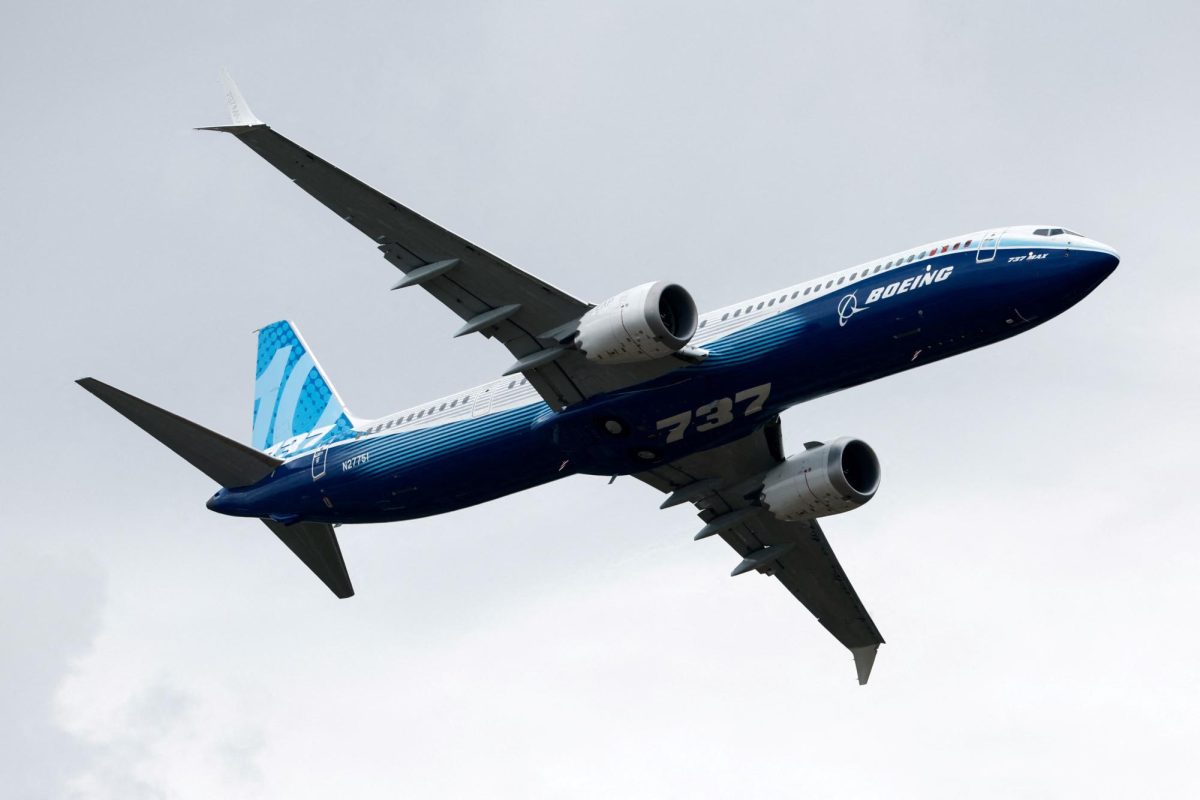
In recent years, Boeing has not had the same growing success as Airbus. The 737 MAX crisis, with two major fatal crashes from that model within a year, led to worldwide groundings until the issues could be resolved, and years of reputational damage to Boeing as a company.
Despite the 737 MAX’s return to operation, Boeing is still working through safety checks and approval delays affecting two models Boeing is currently working on producing.
The MAX 7 and MAX 10 can not be delivered until final approval from the government regulations is obtained.
Junior Noah Stoch said, “Most of the major news I heard about Boeing in the past few years has been negative.”
These delays have been problematic for airlines that have been trying to expand in the years following the COVID pandemic. The lack of aircraft is directly leading to lost revenue and growth limitations.
Even through these struggles, Boeing reported an increase in orders in 2025, receiving more aircraft orders than Airbus for the first time since 2021.
Despite revealing a slight uptick in airlines’ confidence in Boeing, orders are not a direct tell of a production quality increase; the number of completed orders is the true sign.
The rivalry has included production quality struggles for Airbus as well. In late 2025, Airbus issued a significant recall for thousands of A320s after discovering software issues, temporarily grounding a large portion of airlines’ aircraft.
The recall demonstrated how both Boeing and Airbus are facing increasingly more technological challenges as planes become more computerized.
Safety is now heavily reliant on the planes’ software, adding another layer of potential problems, along with engineering reliability and pilot performance.
Junior Paul Raskin said, “I think airplanes becoming less reliant on pilots is an overall positive, because it makes human error less of an issue.”
In the near future, both Boeing and Airbus are looking to revolutionize the future of flight. Airbus is developing its “ZEROe” program, investing heavily in hydrogen-powered aircraft, to produce zero-emission planes by some point in the 2030s.
“If planes are so bad for the environment, this could be a huge step to take, probably giving Airbus a big advantage if it works,” said junior Seth Perlstein.
At the same time, Boeing is focusing on more sustainable fuels, improving its production process and developing new long-term aircraft concepts.
Ultimately, the Boeing vs. Airbus rivalry has pushed and continues to push the limits of commercial aviation as they compete to create safer, greener and more efficient aircraft, evolving and benefiting the aviation industry in every step of the process.