

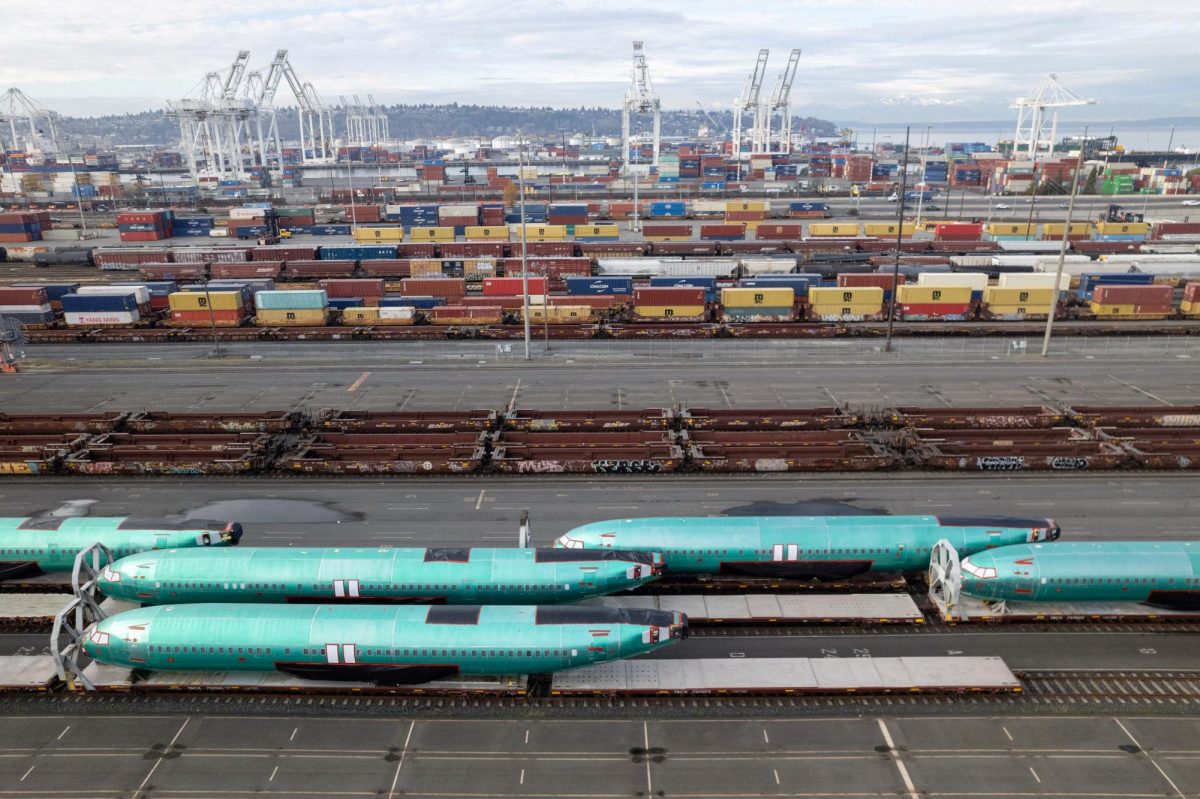
In the 1950s and 60s, the U.S. massively expanded its highway and aviation-based travel, replacing other potential means of travel, like the railroads.
Simultaneously, Japan constructed large High Speed Rail (HSR) systems, and South Korea, Mexico and notably China, have created HSR systems within the past two decades.
America’s direction might have seemed like the future, however, times and people have changed. We are overdue for a change.
Trains, especially HSR, should become the dominant form of travel between cities that are around 100 to 500 miles away. If done properly, it can be economically and environmentally beneficial, and convenient for everyday Americans.
Prioritizing rail-travel would not replace cars or planes in their entirety or anywhere close to that.
Expanding the use of trains over cars in this specific field (2 to 8 hour drives) allows riders to do things they couldn’t do while driving, such as working, resting or other tasks that would distract them from the roads. This in turn makes a safer experience than driving.
According to the Texas A&M Transportation Institute Mobility Report, American drivers spent an average of 63 hours sitting in traffic during 2024. With trains, this number would drop, leading to Americans having more time than ever.
Meanwhile, less money would be spent on fuel being burnt while sitting in traffic on top of fuel being burnt while driving. Land and forests would also become more preserved as less land is used for trains compared to roads which need a lot more.
Trains are a much more environmentally friendly alternative to automotive-travel, as they burn a small fraction of the amount of greenhouse gases that cars do and have a lower emissions rate per person.
While being a great alternative to cars, trains can also be an alternative for planes. It often takes just as much time traveling to-and-from airports, going through security and waiting, than it does actually flying.
Domestically, flights cost hundreds of dollars, and trains may very well be cheaper, especially as ridership increases with time.
Planes and airports are notoriously known for delays and cancellations caused by weather while trains face significantly less delays.
Besides the personal convenience, there is an important economic aspect that cannot be overlooked.
Expanding HSR-travel to and from somewhat-close cities would not replace the massive automotive and aviation industries that employ millions of people. People would still need cars to drive to almost everything else, and this would only exclude long drives that consume people onto the road for an entire day, if not, multiple.
However, unlike the aviation industry which has centralized hubs for manufacturing, railroads are often more locally distributed and the industry is tied to the actual cities that the trains run through.
Meanwhile, whereas cars are a consumption-based industry, trains can bring much more stable and long-term growth to the cities which lie on the rail corridors.
Besides the opportunity for new and different cities to experience economic growth as a result of trains, the rail-travel industry is a new opportunity to expand unionized jobs, bringing further economic growth to the places that previously didn’t receive much benefits from the plane or car industries.
Specific to aviation, short flights (100 to 500 miles) are among the least fuel-efficient forms of air-travel, and similar to cars, are highly subject to fuel-price swings.
Given the sheer size of the automotive and plane-manufacturing industries, it is a terrible idea to replace them entirely and practically impossible.
By expanding railroads as the dominant form of travel between cities 100 to 500 miles away, the cars that people buy will still be bought at the same scale, as long drives are rare compared to the daily need for cars.
It’s all been laid out: the economic, environmental and human importance of railroads in certain parts of American transportation.
Trains should be the primary mode of travel between certain cities that are too long to drive or fly but close enough that it doesn’t replace the need for the millions of workers in the automotive and aviation industries.
Trains would bring jobs and wealth to cities that previously didn’t feel the successes of plane and car manufacturing. It would be convenient for ordinary people, while helping in our fight against one of the biggest long-term threats to Americans and their economy.
Railroads are the future.