

Donald Trump’s 2024 presidency has elicited mixed reactions as supporters hail it as the “greatest economy in history,” while critics are wary of instability beneath the surface.
“I think his second term has created many positive economic benefits, because his policies focus on supporting businesses, encouraging US manufacturing and promoting energy production, which I believe can lead to job growth and growing investments,” said junior Mia Eskin.
Gross Domestic Product (GDP) has experienced continued growth since 2025 but not at the expected rate. Experts indicate that this growth is attributed to trends of continued patterns that are independent of a shift in the president.
GDP growth under President Trump’s second term has been stable at approximately two and a half percent, which is consistent but not reaching the expectations of the White House’s aggressive predictions.
From 2025 to early 2026 jobs data indicates that the labor market rebounded but also faced slow hiring. Government reports indicate that employment in America surged by 130,000 in January 2026, including a decline in unemployment.
This suggests that during Trump’s presidency the job market has been at a healthy growing pace after some weaker hiring in 2025.
Compared to Trump’s successes in the job market and GDP, inflation during his second term has been under scrutiny. Although Trump has campaigned on bringing down prices, some tariffs on imported goods brought prices up for consumers.
Some prices for items have stabilized, but inflation is over the Federal Reserve’s two percent target. The Federal Reserve recently lowered interest rates at the end of 2025, which incentivized borrowing, increased economic growth and naturally raised inflation.
President Trump’s dissatisfaction with the Chair of the Federal Reserve, Jerome Powell, stems from a disparity in their economic beliefs.
While prices of gasoline have decreased heavily under President Trump, the prices of food and essential items have increased due to supply chain issues.
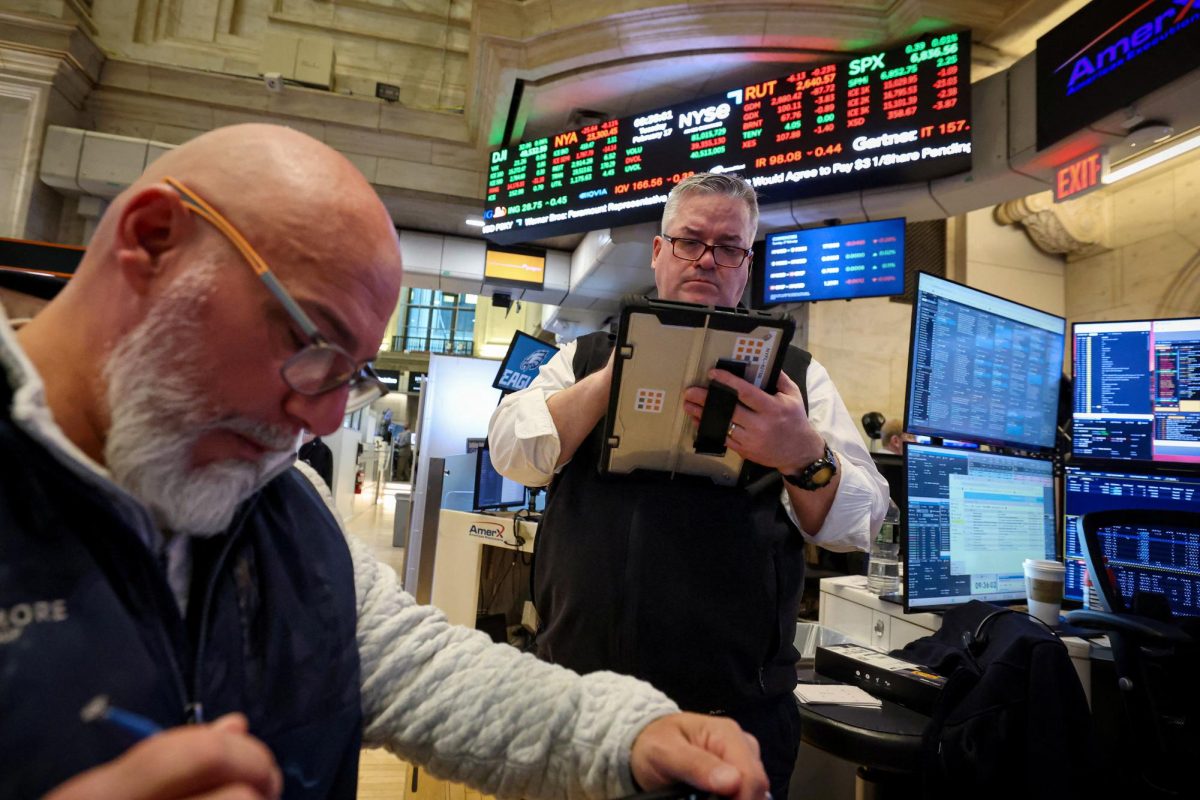
Financial markets also showed volatility due to Trump’s tariffs, but have nevertheless grown due to speculations surrounding Artificial Intelligence. After some periods of tariff-driven uncertainty, the market has constantly rebounded, showing resilience and evidence of investor confidence.
The Standard and Poor’s S&P 500 Index grew seventeen percent in the past year; however, it experienced sharp short-term losses from aggressive tariff policies.
“I think that even though Trump’s tariff policies have negatively impacted the market, it has still experienced solid returns in the long-term,” said junior Noah Stoch.
Furthermore, a contentious fiscal issue raised by Trump’s presidency is the rise in the federal deficit, which is the amount that the government spends that exceeds its revenue in a fiscal year.
The government forecasts that the federal deficit will increase to 1.85 trillion dollars at the end of 2026 because of higher spending, tax cuts and tariff revenue that only offset a limited amount of the deficit.
These trends raise potential questions about the sustainability of an economic plan that only increases the federal deficit.
Although tariffs remain a central part of Trump’s economic strategy, which produces a substantial amount of federal income, it raises prices, which hurts consumers.
Overall, the US economy under President Trump has shown both growth and decline in various aspects. As 2026 progresses, these trends will shape how policymakers and Americans experience and interact with the economy.