
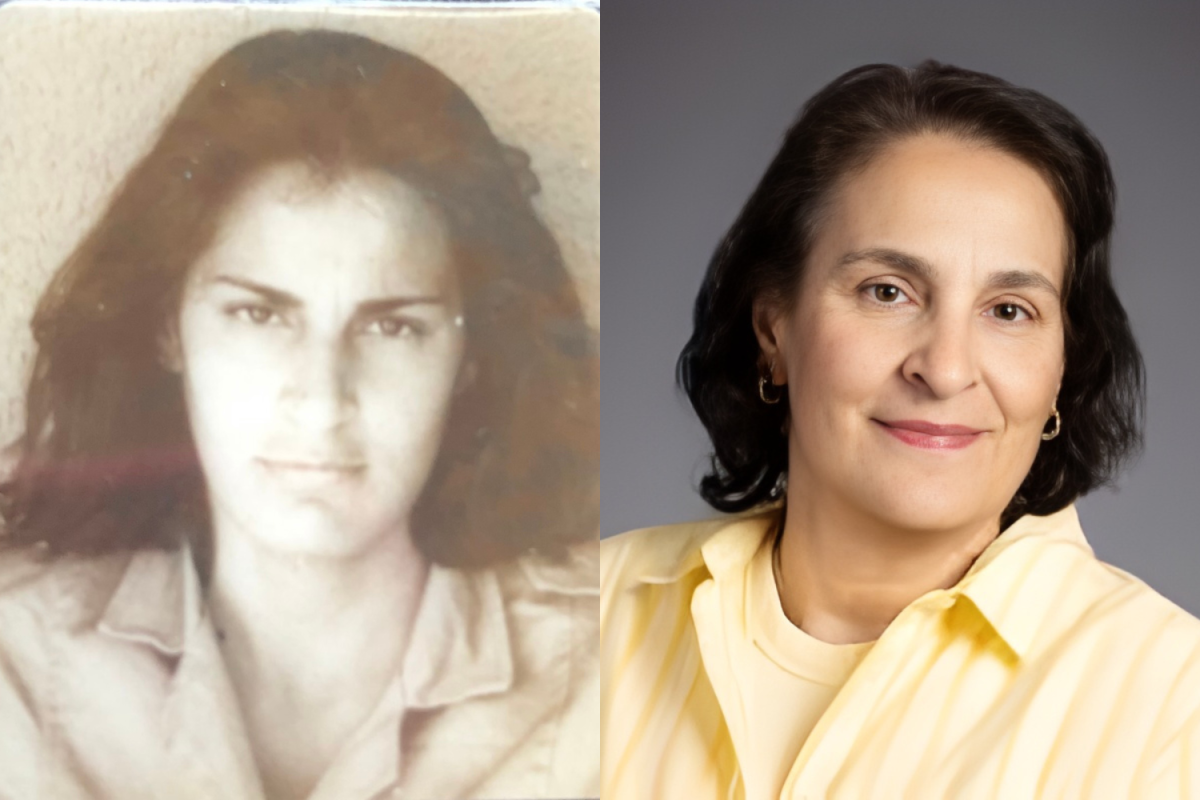
Three GOA Hebrew teachers who served in the Israeli Defense Forces (IDF) made an impact beyond the battlefield: in classrooms, community centers and control rooms.
Morah Kedem, who has been teaching Hebrew at GOA for seven years, remembers being shocked when she received her IDF position. Originally wanting to work with computers, Kedem was instead assigned to help Ethiopian immigrants assimilate into Israeli society.
Her service was during the time of Operation Moses, a covert military operation that airlifted thousands of Ethiopian Jews to Israel, allowing them to escape dangerous conditions in Sudan.
“The army decides what you do based on what they need,” Kedem said. “During this time, there was a big immigration and they needed people to help, so that’s what they chose for me.”
Kedem taught Ethiopian families how to handle all aspects of daily life, from speaking Hebrew to simple tasks, such as using public transportation and shopping.
“I loved to see the success of the family. They told me sometimes, ‘I took a bus somewhere,’ and I loved seeing how happy they were,” Kedem said.
While helping the parents was a major component of her job, most of her daily tasks revolved around the children.
Every day, Kedem would work personally with them at school. Sometimes she assisted in their regular classes, and other times she gave them private lessons.
“I helped them figure out the rules and what to do in subjects from the beginning to the end of the day. We did activities with Israeli students, to help the Ethiopian children socially as well,” Kedem said.
Her ultimate goal was to make them feel a part of the community, especially considering how they had to leave their homes and move to an unfamiliar country on short notice.
She also assisted at local community centers, organizing events like movie nights and Hora dance classes to reduce the cultural divide.
Helping the parents was her most difficult responsibility, particularly finding them jobs. Being unable to speak Hebrew fluently, employers were reluctant to hire them.
The immigrants were also judged for their customs, with people “looking at them like they were from another planet.”
It was upsetting for Kedem to see that families couldn’t always integrate smoothly, particularly when the father struggled. The other family members looked up to him, so his failure would cause them to lose hope.
The process took time, but Kedem found her successes to be very rewarding.
After she completed her service, an Ethiopian family that she helped told her that their son had graduated from high school, and was now serving in the army.
“Situations like that were the reason I became a teacher,” Kedem said.
In contrast, Morah Cudkevich, a Hebrew and Judaics teacher, served in a more traditional role.
Cudkevich served as a פקידת טייסת, an administrative assistant of an air force squadron.
Her role involved creating pilots’ daily schedules—specifically what flights they would be going on, who would be leaving the base, if they had simulation flights to do and conveying other imperative information.
“It required a lot of coordination,” said Cudkevich. “Every day we had to give a report about the weather, not just outside, but up in the sky. We also had to make sure each pilot completed their mandatory flight hours, that the right people were going out to fly that day.”
On her base, pilots flew F-15 jets, F-16 jets and helicopters. The pilots also varied in experience level: some had just graduated from training, whereas others had been serving for years.
During her service, an operation was executed that bombed Iraqi nuclear centers. Cudkevich explained that it was one of her most memorable experiences, considering she had unique insight as an administrative assistant.
“For this mission, the head of our base led the bombing. It was so amazing, so secret, no one knew that our general was part of it. He was an amazing guy,” said Cudkevich. “It’s very interesting to be around those people. They do unbelievable things.”
Unlike Kedem, Cudkevich did not remain where she was originally assigned. She began her time in the IDF on an army base in charge of supplying gas for tanks and trucks.
Despite being safe and close to home, she felt unsatisfied.
“It was boring. I said, ‘No, I want something meaningful. I want to live on the base and have a more impactful job,’” Cudkevich said.
She went through the tedious process of applying for a new position, eventually moving from her home in Be’er Sheva to the Negev.
“They said, ‘Okay, you want to be far away from home? Serve in the desert!’” Cudkevich recalled.
She was initially very homesick, but eventually made friends and adjusted to desert life.
“Experiencing two very different positions really helped me appreciate the army, seeing just how many things they do,” she said.
Considering her gentle and kind demeanor, Morah Toren’s job as a combat fitness instructor surprised her students.
“That’s crazy. She’s so sweet, completely the opposite of what you imagine a military trainer to be,” said sophomore and Hebrew student Salomon Messulan.
“I trained soldiers, making sure they were in good shape for combat,” Toren said. “We did obstacle courses, ran, did strength training, mobility—all aspects of fitness.”
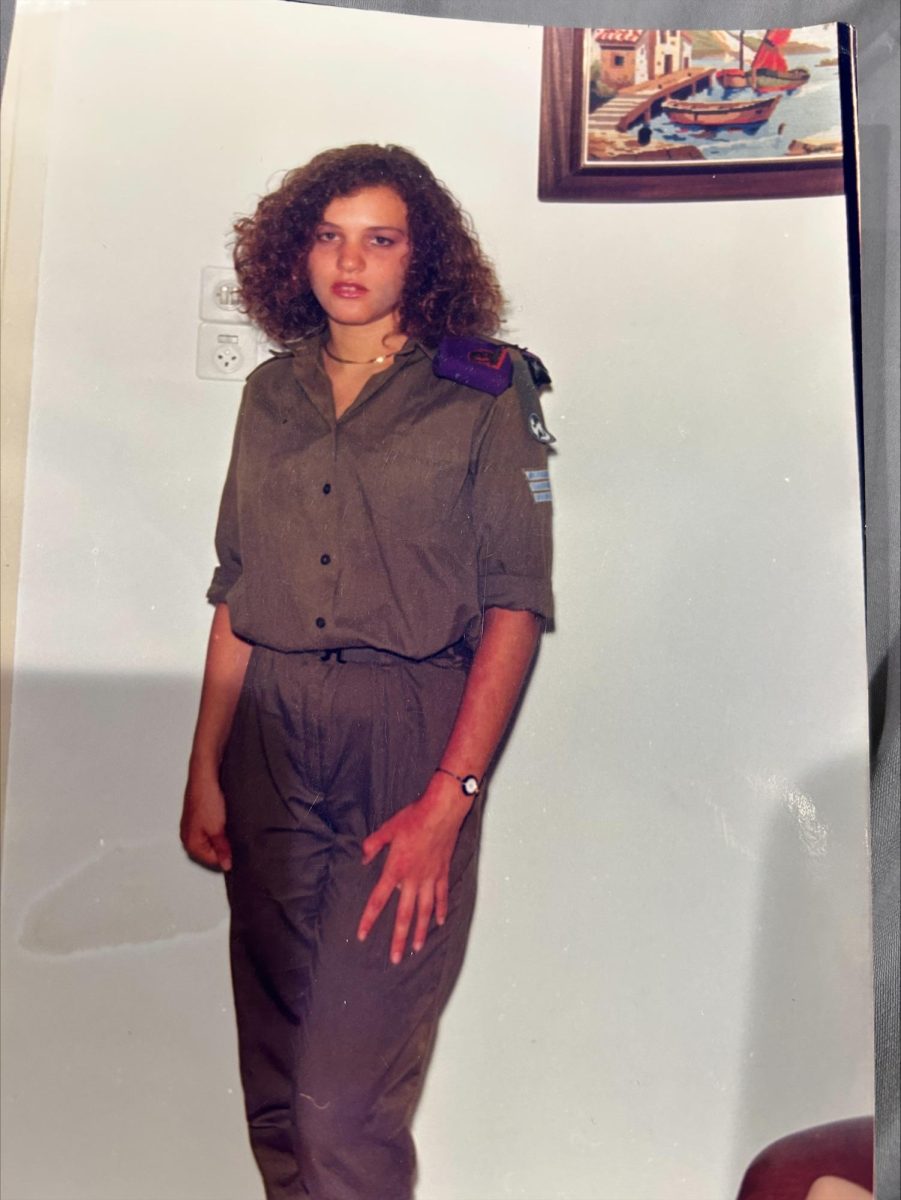
Her role included the typical challenges of training soldiers, such as forcing them to exercises that pushed their physical and emotional limits.
But being stationed close to violence, Toren’s situation was uniquely difficult.
Toren served during the First Intifada, a period of riots and terrorist attacks in the West Bank and Gaza Strip.
“When we were in places like Gaza, I couldn’t really do my job because the soldiers were busy fighting,” Toren said. “I really wanted to keep busy at all times, so I helped in other ways.”
During those times, she assisted soldiers by delivering supplies and offering emotional support.
Toren’s positive experience led her to continue in the fitness field. She later studied at university to become a physical education teacher and worked as a personal trainer.
“I’m happy that I chose this path, and I really loved my job,” said Toren.
Through education, coordination and support, Kedem, Cudkevich and Toren proved that service in the IDF isn’t just about fighting; it’s about impact. Years later, that impact continues, now in the lives of their students.