
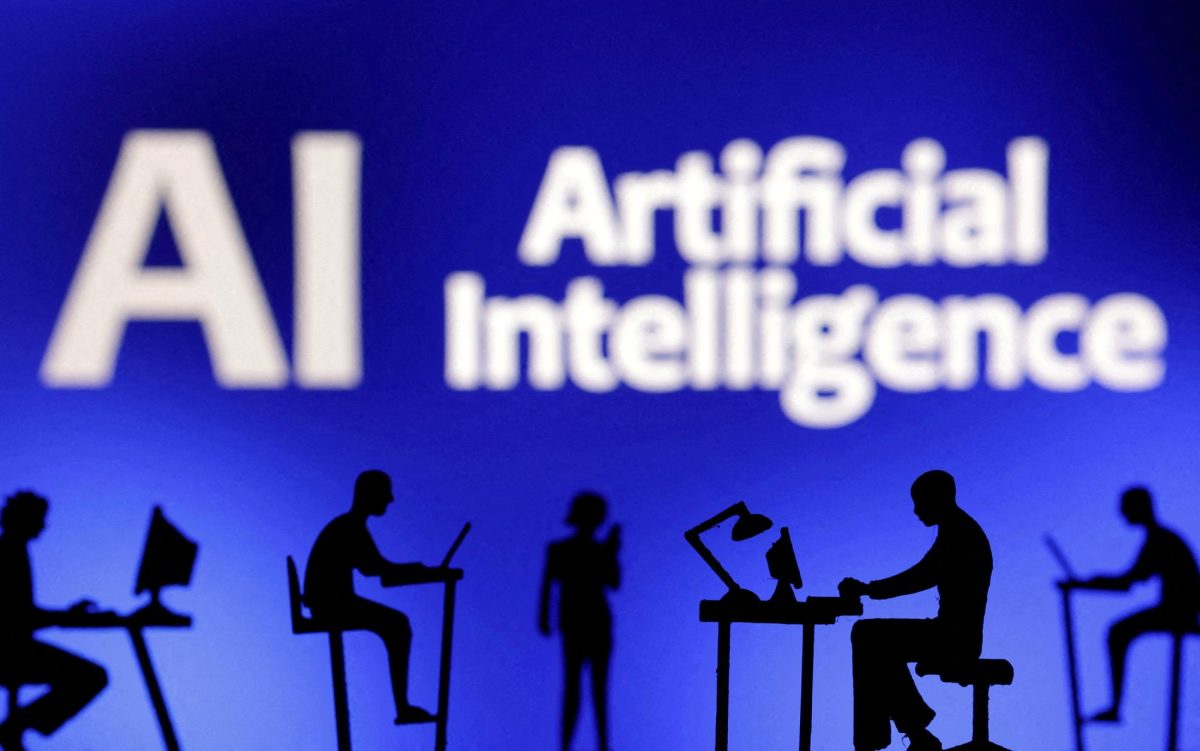
The rise of artificial intelligence has triggered a global cultural conflict over who creates, controls and profits from culture, as artists clash over the role algorithms should play in human creativity.
Since the launch of ChatGPT in 2022, AI systems developed by major technology companies have begun reshaping music, film, visual art, writing and social media.
AI-generated songs now appear on streaming platforms, AI-written scripts are used for pre-visualization in Hollywood, and AI-created images circulate widely online.
These technologies rely on large datasets scraped from existing human-made work, raising legal, ethical and economic questions about authorship and labor.
The debate has intensified as AI tools have become cheaper, faster, and widely accessible, allowing individuals to produce cultural content at an unprecedented scale.
Junior Morgan Sternthal said, “I think AI is a cool tool to use but it has to be used wisely and not for the wrong purposes. You should never impersonate someone or their work and make sure you always give credit.”
One of the first major conflicts became visible to the public in 2023, during the Hollywood strikes by the Writers Guild of America (WGA) and SAG-AFTRA.
Hollywood writers and actors went on strike, citing concerns that studios would use AI to replace or devalue human labor.
Jimmy Fallon, host of The Tonight Show Starring Jimmy Fallon, partook in the strike and said, “I wouldn’t have a show if it wasn’t for my writers; I support them all the way.”
By 2024, similar concerns spread to musicians, visual artists, voice actors and translators. In pop music, AI-generated vocals mimicking real artists circulated online, prompting takedown requests and new platform policies.
“I just don’t know why you need it – if you’re taking a job away from a human being, I think that’s probably a bad thing… If everything is done by robots, everybody’s gonna be out of work,” said artist Ed Sheeran.
Technology companies argue that AI is a tool rather than a replacement, designed to enhance productivity and creativity. Companies like OpenAI, Google, and Meta have stated that their models can make creative production more accessible.
Critics counter that AI democratization often benefits platforms more than creators, concentrating power in a few corporations that control distribution and monetization.
Streaming and social media algorithms play a central role in the culture war.
Recommendation systems determine which songs trend, which videos go viral, and which creators are seen.
As AI-generated content increases, platforms face pressure to decide whether to label, limit or promote it.
Some platforms have introduced disclosure requirements, while others rely on automated systems.
Economic concerns also drive much of the backlash.
Creative industries employ millions of people globally, many of whom already face precarious working conditions.
AI tools that generate text, images or audio in seconds threaten entry-level jobs and freelance work, even as they create new roles in prompt engineering, editing and oversight.
Legal systems are struggling to keep pace with growing AI.
Courts and governments are considering lawsuits over copyright infringement, data usage and the definition of authorship.
The proposed TRAIN Act (Transparency and Responsibility for Artificial Intelligence Networks Act) enables copyright owners like musicians, artists and writers to obtain a subpoena from a U.S. district court to compel AI developers to disclose records identifying the materials used to train their models.
In other words, the law would make AI companies tell the truth. If an artist thinks an AI model stole their work for the purpose of development, the artist can use this law to make the company show a list of everything the AI studied.
This bill has been referred to the Senate Committee on the Judiciary for further consideration.