
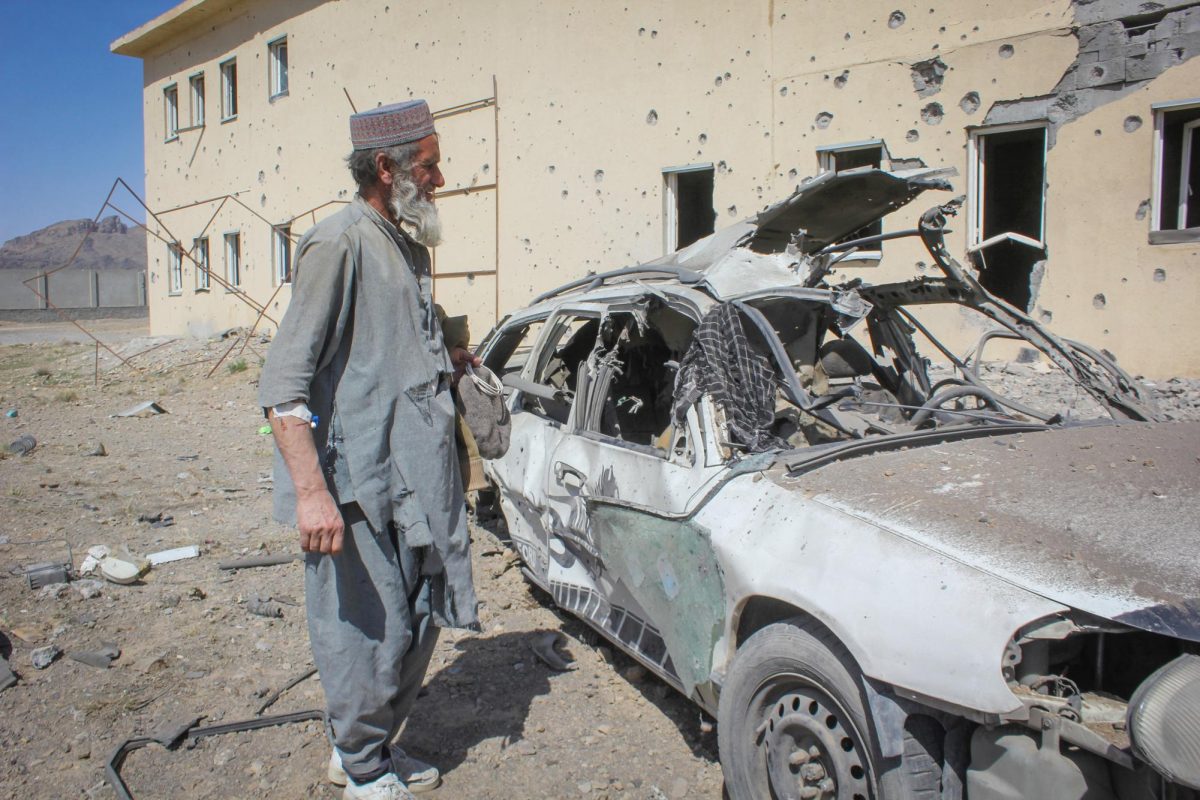
The Pakistani military conducted airstrikes in Afghanistan targeting Taliban camps and hideouts in late February.
This came less than a month after multiple terrorist attacks committed against Pakistan, including the bombing of a Shia mosque in the Pakistani capital of Islamabad, resulting in 32 casualties and 170 injured.
UN secretary general Antonio Guterres called the attack against civilians and places of worship “unacceptable,” according to his spokesperson.
Much of the conflict is centered around the Tehrik-i-Taliban Pakistan (TTP) also known as the Pakistani Taliban, a militant group distinct from the Taliban.
Pakistani officials claim that the TTP is active in safe havens within Afghanistan and they are responsible for a surge in attacks in Pakistan.
Freshman Hanna Laufer said, “Bombing a mosque is outright unethical, giving Pakistan full justification to retaliate.”
On March 17, a drug rehabilitation center in Kabul, Afghanistan was struck, killing at least 400 and injuring over 250 according to the Taliban. However, Pakistan denies targeting the rehabilitation center.
A patient at the center, Yousaf Rahim, said to the Guardian, “My bed was in the corner and I suffered injuries to my leg and thigh. It was a horrific scene. Patients fell from their beds, screaming and running as fire and smoke filled the wards and rooms.”
The conflict has been amplified because of the status of Afghans in Pakistan.
There are approximately 1.98 million Afghans living in Pakistan in 2025 according to the Office of the United Nations High Commissioner for Refugees (UNHCR). This number was upwards to 4 million in 2023.
Pakistan launched a crackdown on illegal immigration in October 2023 giving undocumented immigrants until November 1 to leave, or else they would be forcibly deported. UNHCR states that around 1.7 million people have returned from September 2023 to November 2025.
Pakistani government officials cited the spike in attacks as a motivation for the deportations.
Sophomore Aeden Pinsker said, “It’s absurd and unfair to deport millions of people for the actions of a small group of them.”
According to UNHCR, 115,000 Afghan civilians and 3,000 Pakistani civilians have been displaced. The additional displaced people puts more stress on an already catastrophic humanitarian crisis.
Afghanistan has been heavily overwhelmed by the return of nearly five million Afghan refugees from Iran and Pakistan.
Afghanistan is yet to fully assimilate with the returnees, who are straining the already limited access to basic necessities, as well as the lessening of international assistance.
Since the Taliban takeover, women are absent from the workforce, creating a hole in the economy.
Aid has had difficulty entering Afghanistan, caused mainly by the war in Iran and the fighting with Pakistan.
However, that is not stopping international organizations who help people caught in the crossfire. UNHCR plans to reach 17.5 million Afghans through a humanitarian fund of $1.78 billion.
The conflict between the two countries originated in 1947, when their mountainous border split Afghanistan’s main ethnic group, the Pashtuns, between both states. Consequently, Afghanistan has viewed the border as illegitimate and colonial, as it was the border decided upon by the British who occupied the area.
As tensions escalate, continued cross-border strikes have the potential to further destabilize the region. With hundreds of thousands displaced and diplomatic relationships strained, the conflict does not show signs of stopping.