
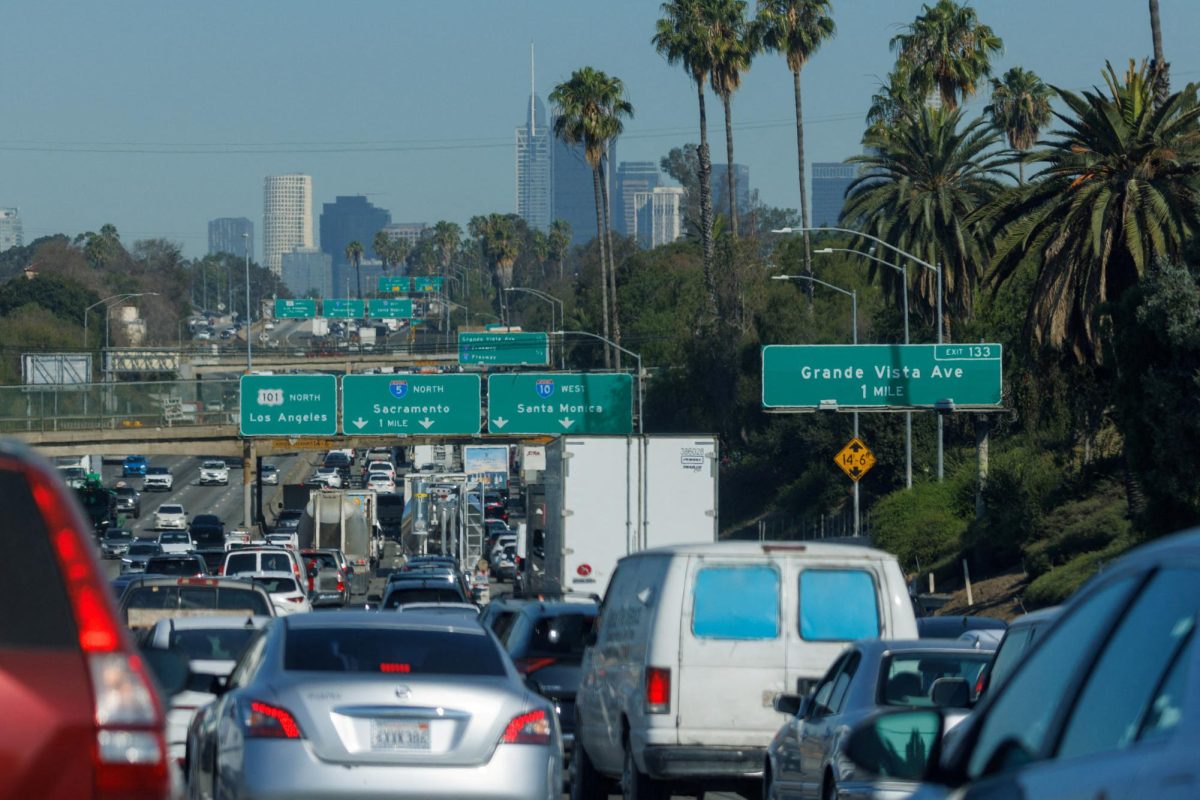
After last year’s destructive wildfire that ripped through the city, Los Angeles and its population struggle to rebuild.
Although most destroyed homes have not been rebuilt, the plots of land where homes once stood have mainly been cleaned and cleared. Around 900 houses are under construction, with a chance that they will be completed by the end of the year.
“It was awful to hear about such a big city experiencing such a destructive climate disaster,” said sophomore Gilad Gefen. “I am hopeful and excited to see how Los Angeles rebuilds, and how the people there rebuild their lives.”
According to the NGO Department of Angels, about 70 percent of survivors of the two main wildfires have not returned home.
Around 600 properties where single-family homes once stood have been sold, their owners fearing inability to pay for the construction.
Another problem remains as many whose homes survived are afraid to live in them out of fear of toxic contaminants.
Junior and Climate Activism Club President Rachel Hyman said, “L.A. won’t be the same, even after it’s rebuilt and people move back because the new city is literally built off of the ashes of the old one. This has made people more aware of climate change and their ability to make positive change.”
The Department of Angels’ survey showed that 70 percent of homes were tested, finding contamination levels about the acceptable amount.
Besides construction, insurance payouts have become an issue for those looking to rebuild.
40 percent of insurance policyholders reported experiencing issues with insurance. This includes increased premiums and dropped coverage.
Another setback with insurance was that policyholders were forced to write a list of everything they own, greatly delaying the insurance payout and increasing the burden on people who already lost their livelihoods.
To tackle this issue, on the first day of 2026, the Eliminate “The List” Act went into effect. This law forces insurance companies to pay 60 percent of someone’s (who lost their home in a disaster) belongings, up to 350,000 dollars, and prevents the company from requiring a list of belongings.
The goal of the bill is to make it easier for those who already paid for their insurance to receive the money they were entitled to.
“This system sounds almost too good to be true because insurance companies are very determined to have to cover as little as possible. I really hope this bill is foolproof enough to prevent them from finding loopholes. If it is, it’ll make a huge difference,” said sophomore Remy Friedberg.
According to the CalMatters non-profit, “The American Property Casualty Insurance Association says insurance companies have paid 22.4 billion dollars of the expected 40 billion in total claims from the L.A. fires.”
However, insurance companies are quick to respond to claims of illegal or deliberately manipulated actions.
State Farm’s spokesman said, “We’re supporting more than 13,500 customers affected by the wildfires, more than any other carrier, and have already paid over 5 billion dollars to help them recover.”
Although the physical, emotional, communal and financial wounds remain, there has been progress and hope in the year since.
All destroyed or damaged schools have resumed instruction, according to the State Government of California.
Besides the governmental efforts to rebuild the areas of the city that were badly affected by the fires, there have been many community and grassroots efforts, highlighting the resilience of Angelinos.
Mutual aid groups have conducted donation drives in the year since, while numerous organizations dedicated to helping disaster survivors have been hard at work.
There are also groups to fund and help in the reconstruction of homes and groups to replace destroyed belongings, as well as organizations that advocate for survivors.
Over the course of January 2025, wildfires tore through the Los Angeles metropolitan area as well as the San Diego area. The Los Angeles area fires lasted around a week, with the two main fires being the Pacific Palisades fire and the Eaton fire.
Although one man was charged with starting the fire in the Pacific Palisades area, many other factors contributed to the ferocity of the fires. Drought conditions, low humidity (dryness), a buildup of highly flammable shrubbery and hurricane-force winds caused the fires to quickly grow and spread.
Blame is also being put on the Los Angeles Fire Department (LAPD).
Los Angeles resident Joanie Eisenberg, said, “The fire department was not prepared for a fire of this magnitude. The water pressure wasn’t enough to cover what was needed and they didn’t have enough firefighters. This resulted in the fire department not putting out the original fire completely, so the hot embers created new fires.”
Ground crews and tactical aircrafts worked to quench the flames for days.
31 people were killed in the fires that forced more than 200,000 people to evacuate, destroyed more than 18,000 homes and structures, and burned close to 58,000 acres of land.
However, one Boston University study connected up to 440 deaths to the wildfires.
This wildfire is the latest in a string of many wildfires over the past few years, and as climate change worsens, so do they.
However, Eisenberg says, “I think the most important thing causing this fire to increase was that they allowed the embers to remain. Otherwise the fire wouldn’t have grown so much. We need to be better prepared in the future.”